

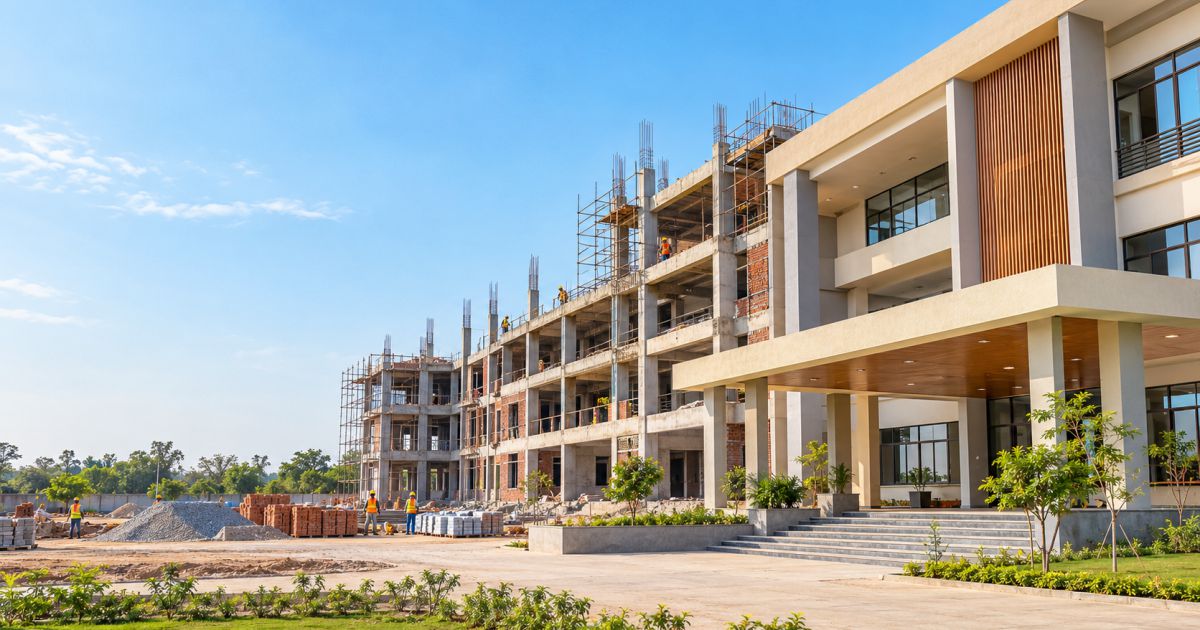
School Construction in Raipur: Planning Safe and Modern Educational Buildings
A school building is more than a place where students attend classes. It is an environment where children learn, develop skills, interact with others, and prepare for their future. Proper planning and quality construction are essential to create a safe, functional, and comfortable educational space.
For educational institutions planning a new campus or expanding an existing facility, choosing the right construction partner is an important decision. If you are looking for school construction services in Raipur, understanding the key stages of educational building construction can help you plan your project more effectively.
Important Factors in School Building Construction
1. Proper Planning and Building Design
Every school has different requirements depending on student capacity, available land, educational activities, and future expansion plans.
Before construction begins, the project should have a well-planned layout that considers classrooms, administrative offices, staff rooms, laboratories, libraries, corridors, and common areas.
A practical design helps make the best use of available space while supporting the daily activities of students and teachers.
2. Safe and Durable Construction
Safety should be a priority when constructing an educational building. The structure must be designed and constructed according to applicable building regulations, structural engineering requirements, and relevant safety standards.
Proper foundations, structural systems, quality construction materials, and professional supervision all contribute to the long-term performance of a school building.
Fire safety, emergency exits, staircase access, and other essential safety provisions should also be incorporated into the planning process.
3. Functional Classrooms and Learning Spaces
Classrooms are the primary learning areas in a school. Their size, ventilation, lighting, and arrangement can influence the comfort of students and teachers.
A well-planned school building should provide sufficient classroom space, suitable circulation areas, and access to essential facilities. Depending on the institution, the design may also include science laboratories, computer rooms, libraries, activity halls, and indoor learning spaces.
4. Ventilation, Lighting and Sanitation
Comfortable learning environments require adequate natural lighting, proper ventilation, and well-maintained sanitation facilities.
School construction planning should consider window placement, airflow, electrical lighting, drinking water facilities, and separate, accessible toilet facilities as required by applicable regulations.
These features support a healthier and more functional environment for students, teachers, and school staff.
5. Playgrounds and Outdoor Areas
Outdoor spaces are an important part of school infrastructure. Playgrounds and open areas provide opportunities for physical activities, sports, recreation, and school events.
During campus planning, it is useful to consider student movement, vehicle access, pedestrian safety, landscaping, boundary walls, and the relationship between classroom buildings and outdoor areas.
A properly organized campus can support both academic activities and extracurricular development.
6. Choosing the Right Construction Method
The appropriate construction system depends on the project requirements, site conditions, budget, building design, and intended use.
Conventional construction is widely used for school buildings requiring classrooms, multiple floors, laboratories, offices, and other permanent facilities.
Pre-Engineered Buildings (PEB) may also be suitable for certain school applications, such as assembly halls, covered sports facilities, multipurpose halls, and selected large-span structures, subject to appropriate engineering and regulatory approvals.
The construction method should be selected according to the specific requirements of the educational institution rather than using the same approach for every project.
School Construction Services in Raipur, Chhattisgarh
Raipur is an important educational and commercial centre in Chhattisgarh. As educational institutions develop new campuses, expand existing facilities, or upgrade their infrastructure, the demand for professionally planned construction continues to be relevant.
School construction projects require coordination between planning, structural engineering, civil works, electrical installations, plumbing, finishing, and other essential building services.
Working with a construction company that understands these requirements can help institutions coordinate the different stages of their projects.
Why Choose Tamim Industries?
Tamim Industries, based in Raipur, Chhattisgarh, provides civil construction, industrial fabrication, conventional shed manufacturing, and pre-engineered building solutions.
For educational infrastructure projects, the construction scope should be discussed according to the institution's requirements, building design, site conditions, and applicable technical standards.
Whether a project involves a new building, campus expansion, multipurpose structure, or associated civil construction work, careful planning and appropriate engineering are essential to achieving a functional result.
Before finalizing a construction partner, educational institutions should review project experience, technical capabilities, quality-control procedures, proposed timelines, and the scope of work included in the quotation.
Steps to Plan a School Construction Project
A school construction project generally involves several stages:
-
Requirement assessment: Determine student capacity, facilities, and future needs.
-
Site evaluation: Review the land, access, soil conditions, and site constraints.
-
Architectural planning: Prepare layouts for classrooms, administration, circulation, and common facilities.
-
Engineering and approvals: Complete structural design and obtain the necessary permissions.
-
Construction and supervision: Execute the approved work with appropriate quality and safety controls.
-
Inspection and handover: Verify the completed facilities and required compliance documentation.
Early coordination between the institution, architects, engineers, and construction team can help reduce avoidable changes during execution.
Conclusion
Building a school requires careful attention to safety, durability, functionality, and the needs of students and teachers. From classroom planning and sanitation to structural engineering and outdoor facilities, every element contributes to the quality of the educational environment.
If you are planning school construction in Raipur, begin with a clear project brief, a suitable building design, and a detailed assessment of the construction requirements.
Tamim Industries offers construction and structural solutions from Raipur, Chhattisgarh. Discussing your project requirements with the team can help establish the appropriate scope and next steps for your proposed educational building.